
Researchers from the Institute of Science Tokyo have identified a critical role for the RNA-binding protein tristetraprolin (TTP) in regulating allergic inflammation. Published in Allergology International on November 15, 2024, the study highlights TTP as a promising target for new treatments of allergic and inflammatory diseases such as asthma and atopic dermatitis.
TTP’s Role in Regulating Basophils: RNA-Binding


Basophils, a rare white blood cell comprising less than 1% of the immune system, are pivotal in triggering allergic responses. When activated, these cells release pro-inflammatory cytokines like IL-4, which drive allergic and inflammatory reactions. However, the molecular mechanisms that regulate cytokine production in basophils have remained poorly understood.
The research team, led by Professor Kensuke Miyake, explored TTP’s role in controlling the stability of mRNAs for inflammatory molecules in basophils. TTP promotes the degradation of these mRNAs, preventing the excessive production of cytokines and chemokines that drive allergic inflammation.
Findings from TTP-Deficient Mice
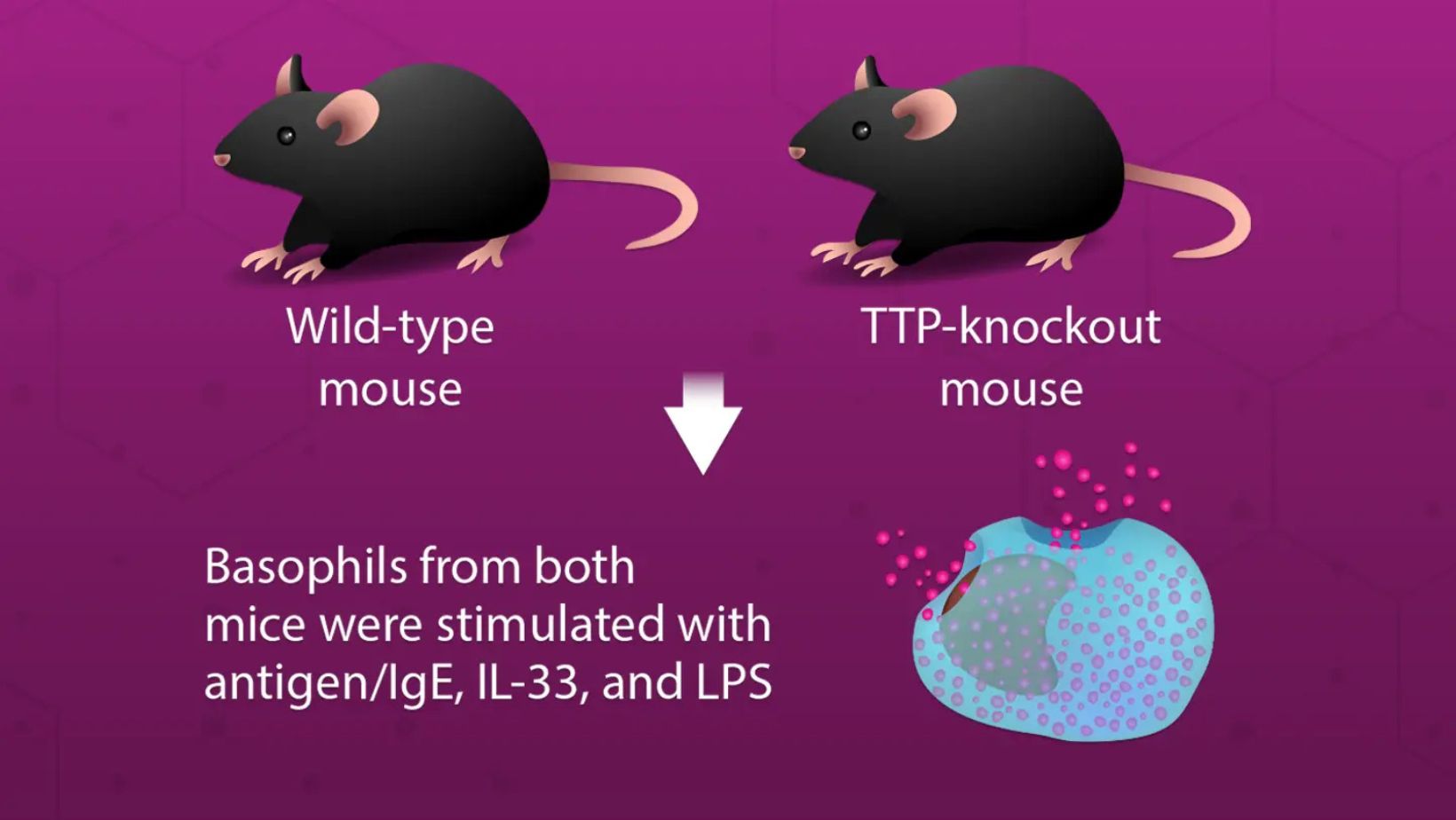
The team used wild-type and TTP-knockout mice to investigate the impact of TTP deficiency. Basophils were stimulated using antigens combined with IgE, IL-33, or lipopolysaccharide (LPS), and researchers measured gene expression, mRNA stability, and inflammatory protein levels. Advanced techniques like RNA sequencing (RNA-seq) and SLAM-seq provided transcriptome-wide insights into TTP’s role.
In TTP-deficient mice, the mRNAs for key inflammatory molecules—including Il4, Il13, Areg, Ccl3, Cxcl2, and Ptgs2—were significantly more stable, leading to higher cytokine and chemokine production levels.
To assess TTP’s role in vivo, the researchers engineered basophil-specific TTP-deficient mice and tested them in a model of oxazolone-induced atopic dermatitis. These mice displayed severe allergic inflammation, including increased ear thickening, scaling, and skin hardening.
Implications for Allergic Disease Therapies: RNA-Binding
Miyake emphasized TTP’s vital role in maintaining immune balance: “By promoting the degradation of mRNA for inflammatory molecules, TTP prevents their overproduction. In its absence, prolonged mRNA stability leads to excessive cytokine production and worsened allergic responses.”
This research positions TTP as a crucial regulator of allergic inflammation. Targeting TTP or its pathways could pave the way for therapies that specifically modulate basophil activity, offering more effective and precise treatments for allergic diseases.
A Path Toward Targeted Treatments
The study provides critical insights into the molecular mechanisms underlying allergic inflammation and the potential for RNA-binding proteins like TTP to serve as therapeutic targets. These findings could lead to the development of innovative treatments for conditions such as asthma, atopic dermatitis, and other allergic disorders, offering hope for improved outcomes and better management of these chronic conditions.
Reference: Junya Ito, Kensuke Miyake, Tomoki Chiba, Kazufusa Takahashi, Yutaro Uchida, Perry J. Blackshear, Hiroshi Asahara, Hajime Karasuyama. Tristetraprolin-mediated mRNA destabilization regulates basophil inflammatory responses. Allergology International, 2024.