Researchers at the University of Stuttgart have developed a groundbreaking method to control the structure and function of biological membranes using “DNA origami.” Their findings, published in Nature Materials, suggest that this innovative system could enhance drug delivery by creating transport channels for therapeutic molecules to enter cells more efficiently.
Breakthrough in DNA Origami and Nanotechnology


The research, led by Professor Laura Na Liu, represents a significant advancement in synthetic biology. By leveraging DNA nanotechnology, her team successfully manipulated the shape and permeability of lipid membranes in artificial cells. These membranes, known as giant unilamellar vesicles (GUVs), serve as simplified models of biological cell membranes and are widely used to study cellular dynamics and drug transport.
Using specially designed DNA nanorobots, the scientists created transport channels within these membranes, allowing large molecules such as therapeutic proteins to pass through. Unlike natural biological transport mechanisms, these synthetic channels can be opened and closed on demand, offering precise control over molecular delivery.
Programmable DNA Nanorobots
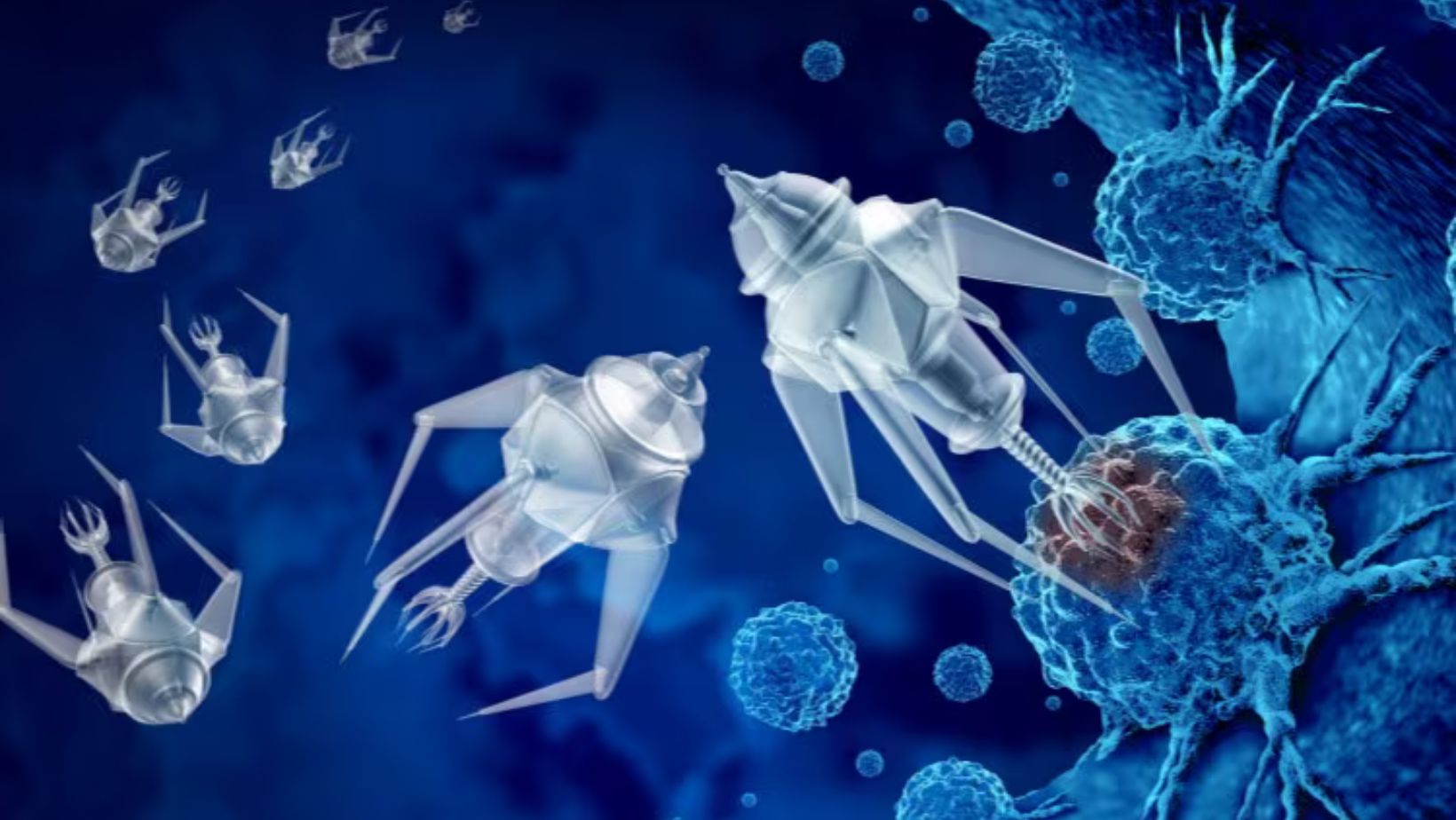
At the core of the study is DNA origami—a technique that folds long DNA strands into specific structures using short “staple” sequences. The research team engineered these DNA origami structures into reconfigurable nanorobots capable of interacting with synthetic cell membranes. When triggered, these nanorobots altered the shape of GUVs and formed synthetic channels, enabling the controlled movement of molecules across the membrane.
“This work is a milestone in the application of DNA nanotechnology to regulate cell behavior,” said Liu, Director of the 2nd Physics Institute at the University of Stuttgart and a Fellow at the Max Planck Institute for Solid State Research. Co-author Prof. Stephan Nussberger emphasized the novelty of the approach, noting that the functional mechanism of these DNA nanorobots has no direct biological equivalent in living cells.
Potential for Drug Delivery and Therapeutic Applications

The ability to create and regulate transport channels in synthetic membranes could have significant implications for medicine. According to the researchers, this technology may lead to new methods for delivering drugs, therapeutic proteins, or enzymes directly into target cells with high precision. DNA nanorobots could provide a more efficient and controllable alternative for future medical treatments by minimizing the complexity of traditional biological delivery systems.
“This progress could be crucial for future therapeutic strategies,” co-author Prof. Hao Yan said. The team aims to refine its approach further and explore its potential applications in living cells, opening new possibilities in regenerative medicine and targeted drug therapy.
Reference: Sisi Fan, Shuo Wang, Longjiang Ding, Thomas Speck, Hao Yan, Stephan Nussberger, Na Li. Morphology remodelling and membrane channel formation in synthetic cells via reconfigurable DNA nanorafts. Nature Materials, 2025.