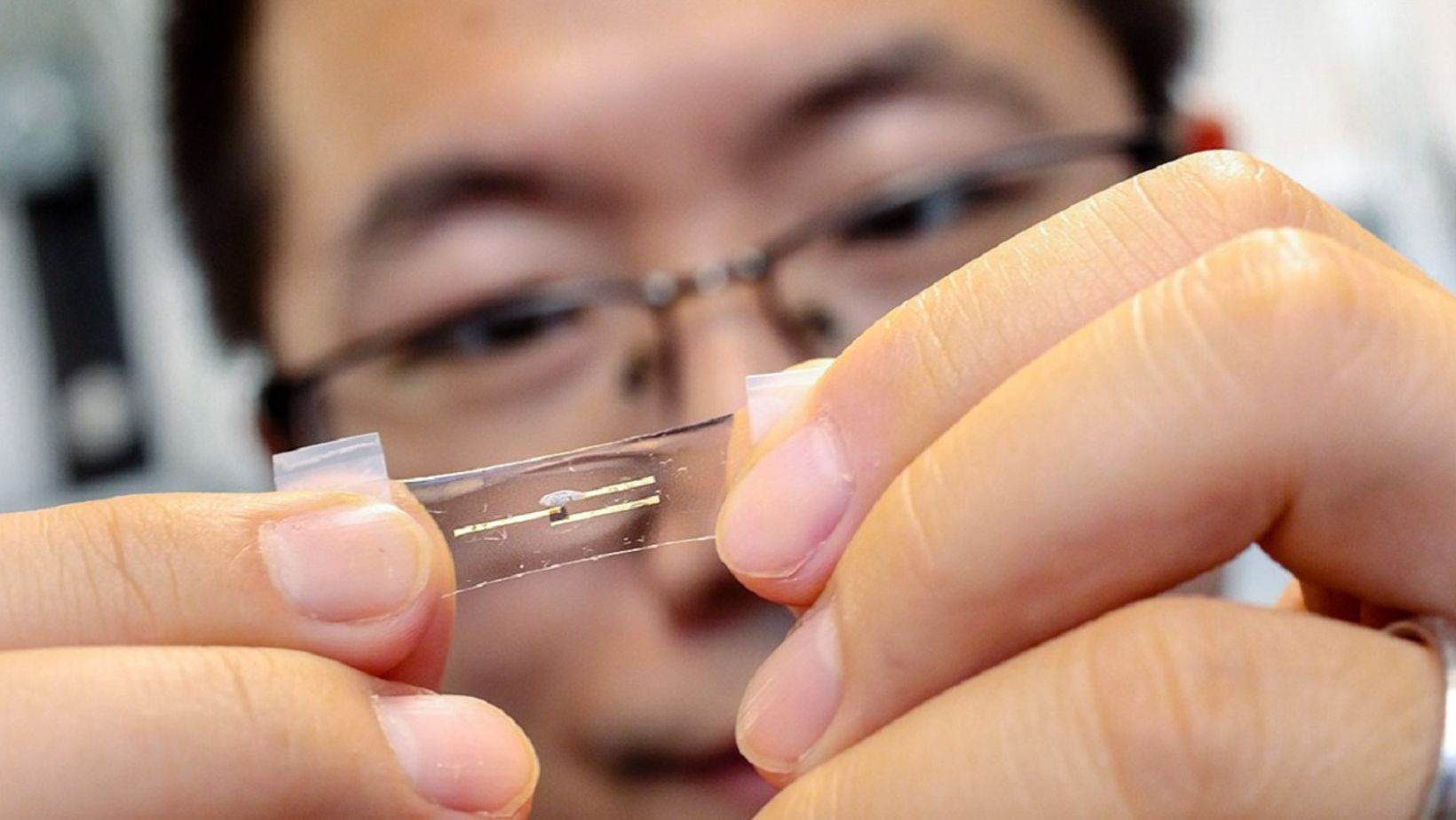
With cancer, diabetes, and heart disease ranking among the leading causes of disability and death in the United States, early detection is critical. A team of researchers led by Zheng Yan at the University of Missouri has developed an innovative, skin-like material that could revolutionize long-term Chronic Disease health monitoring.
This ultrasoft, stretchable, and breathable material forms the foundation of a wearable bioelectronic device capable of tracking multiple vital signs, including blood pressure, electrical heart activity, and skin hydration—all from the comfort of home.
A Game-Changer in Wearable Bioelectronics for Chronic Disease


At the heart of this breakthrough is a liquid-metal elastomer composite designed to feel as natural as human skin. According to Yan, an assistant professor in Chemical, Biomedical, and Mechanical Engineering, the material creates minimal pressure on the skin—less than the 20 kilopascals that most people can feel.
This means the device is so comfortable that users may not even notice they’re wearing it. “Our overall goal is to improve the long-term biocompatibility and accuracy of wearable bioelectronics through the innovation of this porous material,” Yan explained.
In addition to its comfort, the material is designed to be antibacterial and antiviral, reducing the risk of pathogens forming on the skin during extended use.
Reliable Data Collection During Motion

One of the most significant challenges in wearable devices has been maintaining electrical performance during movement. Yan’s team addressed this with a feature they call “mechanical and electrical decoupling.” This ensures it delivers high-quality biological signals without interference, even when the material stretches with human motion.
Unlike other liquid-metal elastomer composites, this new porous design prevents the liquid metal from leaking when the material is stretched. This innovation enhances durability and safety, making it a practical option for everyday use.
Looking to the Future of Healthcare

Building on prior work that included a heart monitor, this latest advancement is a step closer to creating a fully functional, in-home health monitoring system. Yan envisions a future where the device wirelessly transmits biological data to a smartphone or similar electronic device, allowing seamless sharing with medical professionals for early diagnosis and timely interventions.
The research, published in Science Advances, represents a collaborative effort with co-authors from institutions nationwide. As the team continues refining its design, this skin-like bioelectronic device holds incredible promise for transforming how chronic diseases are monitored and managed—bringing us one step closer to a future of personalized, preventative healthcare.
Reference: Yadong Xu, Yajuan Su, Xianchen Xu, Brian Arends, Ganggang Zhao, Daniel N. Ackerman, Henry Huang, St. Patrick Reid, Joshua L. Santarpia, Chansong Kim, Zehua Chen, Sana Mahmoud, Yun Ling, Alexander Brown, Qian Chen, Guoliang Huang, Jingwei Xie, Zheng Yan. Porous liquid metal–elastomer composites with high leakage resistance and antimicrobial property for skin-interfaced bioelectronics. Science Advances, 2023